

Basic advice delivery requires specific automation capabilities including decision tree logic, automated suitability assessment and compliance monitoring to achieve cost-effective service for mass market consumers.
Why Automation Enables Basic Advice
Basic advice only becomes economically viable when technology reduces per-customer costs substantially below traditional advice.
Manual basic advice processes still require 45 to 90 minutes per customer even with simplified fact-finding. This time commitment makes serving customers with modest investment amounts unprofitable.
Automation reduces interaction time to 15 to 30 minutes by handling data gathering, suitability assessment and documentation generation. Technology performs repetitive work whilst humans focus on judgement and customer relationships.
Cost per customer drops from £50 to £100 with manual processes to £15 to £30 with automation. This reduction enables profitable service for consumers investing £5,000 to £50,000.
Scale requirements decrease when automation improves efficiency. Firms need fewer customers to reach profitability with technology support compared to manual delivery.
Foresters Financial demonstrates that basic advice works at scale serving 1.3 million customers. Their success relies substantially on appropriate automation supporting efficient processes.
Decision Tree Automation
Structured decision logic guides basic advice delivery ensuring consistency and compliance.
Question sequencing determines what information to gather based on customer responses. Decision trees branch appropriately depending on circumstances, goals and product types.
Suitability criteria application evaluates whether products meet customer needs based on gathered information. Automated logic applies regulatory standards consistently.
Product recommendation generation selects appropriate solutions from limited ranges based on suitability assessment. Systems present options meeting customer requirements.
Explanation creation produces clear descriptions of why recommendations suit customers, how products work and what to consider. Templates populate with customer-specific information.
Gap identification flags missing information or circumstances requiring additional assessment. Systems prevent incomplete advice from proceeding.
Escalation triggers identify situations exceeding basic advice scope. Complex circumstances, large investments or vulnerability indicators route customers to comprehensive advice.
One building society’s basic advice decision tree includes 80 decision points covering workplace pension selection, ISA choices and simple protection needs. The logic ensures consistent, compliant recommendations.
Automated Suitability Assessment
Technology evaluates whether products meet customer needs based on basic advice criteria.
Rules-based logic applies suitability standards defined by regulations and firm policies. Systems check that customer characteristics, goals and risk tolerance align with product features.
Risk profiling automation analyses customer responses to determine appropriate risk categories. Algorithms evaluate attitude to risk, capacity for loss and investment experience.
Product matching compares customer profiles against product features, charges and risk characteristics. Systems identify solutions meeting suitability criteria.
Contraindication checking ensures products do not conflict with customer circumstances. Automation flags situations where recommendations would be inappropriate.
Confidence scoring indicates how certain the system is about suitability. Lower confidence levels trigger human review before proceeding.
Audit trail generation captures assessment logic, data used and suitability conclusions. Complete records support regulatory reviews.
Data Collection Automation
Efficient information gathering reduces customer and adviser time whilst ensuring completeness.
Pre-population from existing records pulls known customer information from CRM systems, previous interactions and account data. Customers confirm or update rather than providing information firms already hold.
Digital forms with conditional logic show only relevant questions based on previous responses. Dynamic forms reduce burden by skipping unnecessary sections.
Data validation checks information for completeness and consistency as customers provide it. Real-time verification prevents proceeding with incomplete or contradictory data.
Integration with external sources accesses information from pensions dashboards, open banking or credit reference agencies when customers authorise. This reduces manual data entry.
Mobile-optimised interfaces allow customers to provide information on smartphones or tablets. Convenient access improves completion rates.
Progress saving enables customers to complete information gathering across multiple sessions. They can start, pause and resume without losing data.
Documentation Automation
Technology generates required basic advice records efficiently whilst meeting regulatory standards.
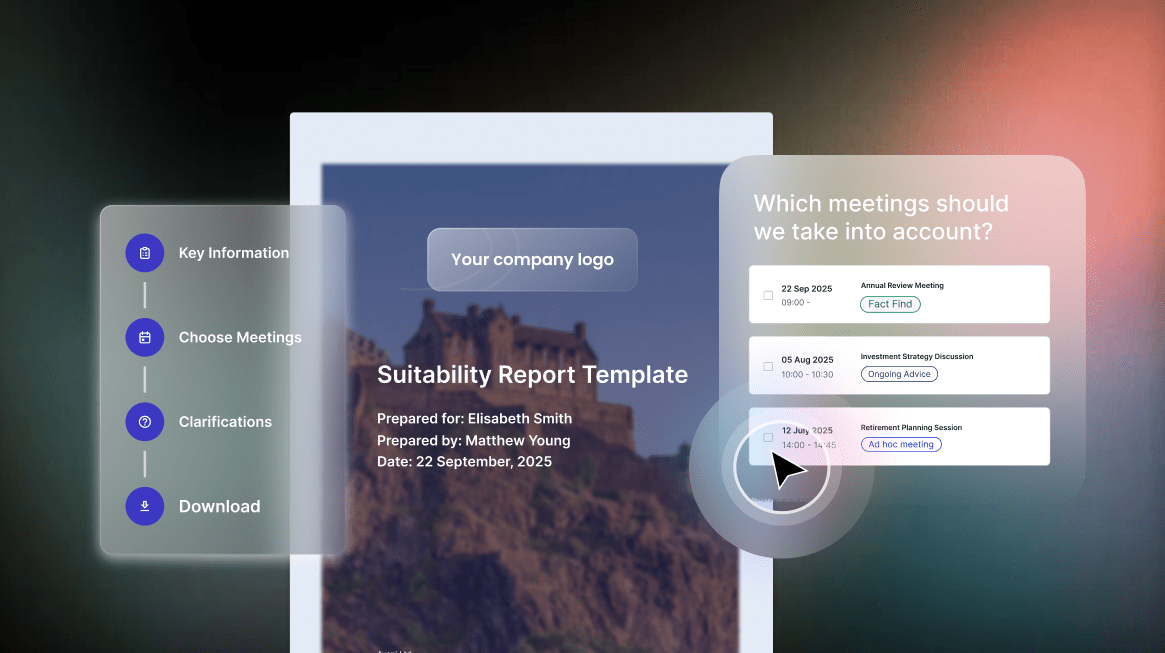
Template population fills pre-approved formats with customer information and recommendation rationale. Automation ensures consistent structure and complete content.
Regulatory language insertion includes required disclosures, risk warnings and product information automatically. Systems apply appropriate text based on product types and customer circumstances.
Personalisation adds customer-specific details making documentation relevant whilst maintaining efficiency. Names, amounts, timeframes and circumstances appear appropriately.
Version control maintains records of drafts, approvals and final documents. Complete history supports compliance and audit requirements.
Electronic signature integration enables customers to review and approve documentation digitally. This accelerates finalisation without printing and mailing.
Automated filing stores completed basic advice records in appropriate locations within document management systems. Proper organisation supports retrieval and regulatory compliance.
Compliance Monitoring Automation
Technology verifies that basic advice processes meet regulatory standards consistently.
Quality assurance sampling reviews percentages of interactions automatically. Systems check suitability logic, documentation completeness and regulatory alignment without manual review of every case.
Exception flagging identifies interactions requiring human oversight including edge cases, low confidence assessments or customer circumstances suggesting vulnerability.
Outcome tracking monitors whether customers receiving basic advice achieve expected results. Automation detects patterns suggesting process improvements.
Regulatory reporting generates required submissions from basic advice data. Systems compile customer volumes, product distributions, outcomes and issues automatically.
Alert generation notifies compliance teams about situations needing attention. Automated monitoring catches problems early.
Consumer Duty evidence demonstrates that basic advice delivers good outcomes through automated data collection and analysis.
Integration Requirements
Basic advice automation must connect with existing advice firm systems.
CRM integration pulls customer data and updates records with basic advice interactions. Bidirectional connectivity maintains consistency across systems.
Product platform connections enable straight-through processing when customers accept recommendations. Applications proceed without manual re-keying.
Back-office system integration handles administration including new business processing, fund transfers and policy setup.
Document management connectivity ensures basic advice records file appropriately in client folders with correct metadata.
Communication platform integration supports delivery through web portals, mobile apps, email or phone systems.
Reporting system connections provide data for performance monitoring, compliance oversight and strategic planning.
One advice network required integration with intelliflo office, FNZ platform and their document management system. Pre-built connectors from their automation vendor reduced implementation time from 6 months to 10 weeks.
Cost Structure Analysis
Understanding how automation affects basic advice economics guides investment decisions.
Technology costs include licensing fees, implementation expenses, integration work and ongoing support. Mid-sized firms typically invest £40,000 to £80,000 for basic advice automation.
Per-customer costs decrease substantially with automation. Manual processes averaging £75 per customer reduce to £20 per customer with technology.
Break-even customer volumes determine when firms reach profitability. At £20 per customer cost and £35 average revenue, firms need approximately 2,000 customers annually to recover £40,000 technology investment plus operating costs.
Scale economics improve margins as volumes increase. Once fixed technology costs are covered, additional customers generate strong returns.
Staff productivity improvements allow existing teams to serve more customers. One adviser handling 500 basic advice customers annually without automation increases to 2,000 customers with technology support.
Implementation Approach
Deploying basic advice automation follows structured phases managing complexity and risk.
Requirements definition identifies what customer needs the firm will address, which products qualify and what processes are required. Clear scope prevents feature creep.
Decision tree design maps logic flows, suitability criteria and escalation rules. This intellectual work determines automation quality.
System configuration translates decision trees into technology. Whether using vendor platforms or custom development, accurate configuration is critical.
Integration development connects basic advice automation with existing systems. Technical work enables data flow and process continuity.
Testing validates that automation performs correctly across various scenarios. Comprehensive testing prevents customers experiencing errors.
Staff training prepares teams to work with automation, handle escalations and maintain quality.
Pilot deployment serves limited customers validating the complete solution before full launch.
Vendor vs Custom Development
Firms choose between purchasing platforms or building automation internally.
Vendor platforms offer pre-built basic advice capabilities designed for financial services. Benefits include faster implementation, proven functionality and ongoing product development. Limitations include less customisation and vendor dependency.
Custom development provides maximum flexibility and control. Firms build exactly what they need. Drawbacks include longer timelines, higher costs and ongoing maintenance requirements.
Hybrid approaches use vendor platforms for core capabilities with custom development for firm-specific requirements. This balances speed and control.
Decision factors include firm size, IT capabilities, budget, timeline requirements and uniqueness of processes.
Most mid-sized advice firms benefit from vendor platforms reducing implementation risk and accelerating time to market.
Quality Assurance in Automated Processes
Maintaining standards when automation handles basic advice requires specific approaches.
Sampling strategies review percentages of automated interactions ensuring quality. Statistical sampling provides confidence without reviewing everything.
Exception review focuses human oversight on cases flagged by automation as complex, uncertain or problematic.
Outcome monitoring tracks customer results over time. Good outcomes validate automation whilst problems trigger investigation.
Regular audits verify that decision tree logic remains appropriate, suitability criteria align with regulations and documentation meets standards.
Customer feedback collection identifies satisfaction issues or confusion suggesting process improvements.
Continuous improvement incorporates lessons from quality assurance into automation refinements.
Regulatory Compliance Considerations
Automated basic advice must meet FCA requirements consistently.
PRIN 2.1 framework compliance ensures automation implements basic advice rules correctly including product limitations and simplified processes.
Consumer Duty alignment requires automation delivers good outcomes, provides fair value and ensures customer understanding.
Treating Customers Fairly principles apply to automated processes. Technology must not discriminate and must serve vulnerable customers appropriately.
Record keeping requirements mandate complete documentation of automated decisions, data used and customer interactions.
Audit trail capabilities demonstrate to regulators how automation reaches conclusions and maintains standards.
Frequently Asked Questions
Can basic advice be fully automated without human involvement? No. While automation handles assessment and documentation, human oversight ensures quality and handles situations requiring judgement. FCA expects appropriate human involvement.
What happens when automated basic advice encounters unusual circumstances? Escalation logic routes complex situations to human advisers. Automation identifies cases exceeding its scope and ensures appropriate expertise handles them.
How long does basic advice automation implementation take? Vendor platforms typically deploy in 12 to 16 weeks including integration and testing. Custom development requires 6 to 9 months.
Does automation reduce the need for qualified advisers? Automation allows fewer senior advisers to oversee more basic advice whilst less qualified staff handle routine interactions with technology support.
Learn how Aveni enables efficient basic advice delivery through intelligent automation →