

Technology solutions can address the UK advice gap affecting 15.8 million adults by reducing service costs, enabling targeted support and automating processes. AI, digital tools and automation make financial guidance accessible and affordable for mass market consumers.
Understanding the UK Advice Gap
The advice gap represents millions of consumers lacking access to appropriate financial guidance despite needing support.
15.8 million UK adults do not use regulated financial advice according to FCA research. This excludes consumers who could benefit from guidance making financial decisions.
Contributing factors include high advice costs that consumers cannot afford, minimum investment thresholds excluding smaller clients, complexity of financial decisions requiring expert help and lack of awareness about available services.
Market dynamics perpetuate the gap as advice firms focus on higher-value clients for profitability. Traditional economics make serving mass market consumers unviable.
Consequences include poor financial outcomes for consumers, inadequate retirement savings, inappropriate product choices and vulnerability to mis-selling.
The Advice Guidance Boundary Review aims to address this gap through targeted support and enhanced basic advice frameworks. Technology enables these solutions.
Royal London modelling shows targeted support could benefit 21.5 million people. Combined with basic advice, technology-enabled solutions can substantially reduce the advice gap.
AI-Powered Customer Segmentation
Technology identifies consumers with similar needs enabling group-based support at scale.
Data analysis processes information from CRM systems, transaction history, demographic data and stated goals. AI algorithms detect patterns indicating which customers share characteristics.
Clustering algorithms identify natural customer groups. Machine learning discovers segments with similar needs, circumstances and appropriate solutions.
Needs assessment for groups determines common requirements within segments. AI analyses what customers typically need based on shared characteristics.
Automated assignment places individual customers into appropriate segments based on their profiles. Systems apply segmentation logic consistently.
Dynamic re-segmentation updates customer groups when circumstances change. AI detects life events or financial shifts triggering reassessment.
One building society used AI segmentation to identify eight distinct customer groups within their mass market base. Each segment received tailored guidance appropriate for common needs.
Digital Advice Delivery Platforms
Technology enables cost-effective guidance through digital channels reducing human intervention requirements.
Web portals provide customers self-service access to fact-finding tools, AI-generated recommendations and educational resources. Digital delivery scales efficiently.
Mobile applications extend access to smartphones and tablets. Convenient interfaces improve engagement particularly for younger consumers.
Chatbot interfaces allow conversational interactions with AI. Natural language processing enables customers to ask questions and receive personalised responses.
Robo-advice engines automate investment recommendations based on goals, risk tolerance and circumstances. Algorithm-driven guidance reduces costs substantially.
Video guidance combines digital efficiency with human connection. Pre-recorded or live video provides personal touch without face-to-face meeting costs.
Omnichannel coordination ensures seamless experience across digital and human channels. Customers switch between self-service and adviser support fluidly.
Automated Fact-Finding and Assessment
Technology gathers customer information efficiently whilst reducing burden and improving accuracy.
Digital fact-finds guide customers through questionnaires with conditional logic showing only relevant questions. Dynamic forms reduce completion time.
Data pre-population pulls information firms already hold from CRM, transaction systems and previous interactions. Customers confirm or update rather than providing everything manually.
Open banking integration accesses account information with customer permission. Automated data gathering improves accuracy and reduces manual entry.
Validation rules check information completeness and consistency in real-time. Immediate feedback prevents proceeding with incomplete data.
Risk profiling algorithms analyse responses determining appropriate risk categorisation. Automated assessment applies consistently across all customers.
Integration with external sources including pensions dashboards provides comprehensive financial pictures. Connected data improves guidance quality.
AI-Generated Recommendations
Technology creates appropriate suggestions for customer segments or individuals based on comprehensive analysis.
Suitability engines process customer information against product criteria applying regulatory standards. AI evaluates which solutions meet needs appropriately.
Product comparison evaluates features, costs, risks and benefits across available options. Systems present suitable choices with clear explanations.
Regulatory compliance checking ensures recommendations meet FCA requirements. Automated logic applies COBS rules and Consumer Duty standards.
Explanation generation creates clear descriptions of why suggestions suit customers. Natural language generation produces understandable content.
Scenario modelling shows potential outcomes under different assumptions. Visual presentations help customers understand implications of choices.
Personalisation tailors recommendations and explanations to individual circumstances, preferences and comprehension levels.
Automated Documentation and Compliance
Technology generates required records and maintains regulatory standards efficiently.
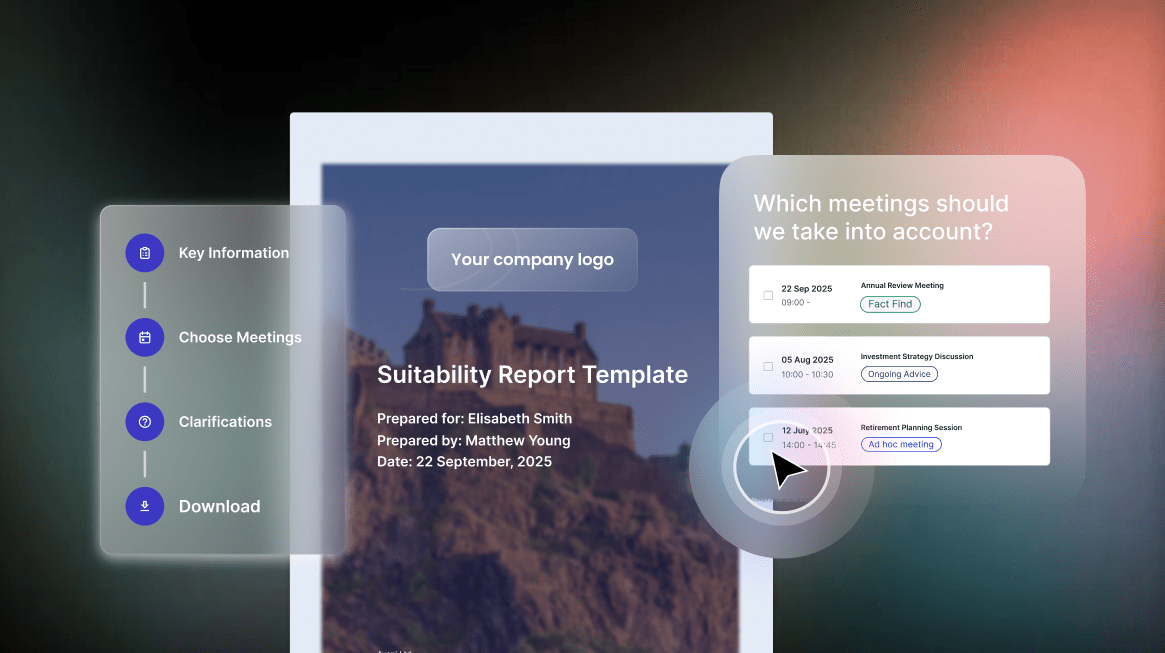
Suitability report generation creates compliant documentation automatically. AI populates templates with customer information and recommendation rationale.
Regulatory language inclusion ensures required disclosures, risk warnings and product information appear appropriately. Systems apply correct text for product types and circumstances.
Record keeping automation files completed documentation in proper locations with appropriate metadata. Organised records support compliance and retrieval.
Quality assurance sampling reviews interactions automatically. AI checks more cases than manual processes identifying issues requiring attention.
Outcome monitoring tracks whether customers receiving technology-enabled guidance achieve satisfactory results. Aggregate data identifies improvement opportunities.
Consumer Duty evidence compilation demonstrates good outcomes through automated data collection and analysis.
Cost Economics of Technology Solutions
Understanding how technology affects service economics illustrates gap-closing potential.
Traditional advice costs of £1,500 to £3,000 per client make serving mass market consumers unviable. These costs require substantial investable assets for profitability.
Technology-enabled guidance costs £100 to £500 per client reduce barriers substantially. Lower costs make service viable for consumers with modest assets.
Break-even asset levels drop from £50,000 minimum to £5,000 minimum when technology reduces service costs. This expands addressable market dramatically.
Customer volumes required for profitability determine scale needs. Technology-enabled models need 2,000 to 4,000 customers compared to 200 to 400 for traditional advice.
Contribution margins per customer remain healthy enabling profitable businesses serving mass market. Technology cost structures support viable economics at scale.
Implementation Approaches
Firms can adopt different strategies deploying technology solutions for the advice gap.
Standalone digital services provide purely technology-enabled guidance with minimal human intervention. This achieves lowest costs and broadest accessibility.
Hybrid models combine digital tools with human support. Customers receive AI-powered recommendations with adviser access when needed.
White-label solutions allow firms to offer technology-enabled services under their brands without building systems internally. Faster market entry with lower investment.
Partnership models integrate advice firm expertise with technology provider platforms. Combined strengths deliver comprehensive solutions.
Phased deployment starts with limited segments or products proving viability before expansion. Risk management whilst building capability.
One insurer partnered with a technology provider launching hybrid targeted support for workplace pension customers. Success led to expansion across other products and customer segments.
Integration with Existing Services
Technology solutions for the advice gap complement rather than replace traditional advice.
Service tier structure positions technology-enabled guidance alongside full advice. Different offerings serve different customer needs and circumstances.
Customer journey management routes individuals to appropriate service levels. Simple needs receive digital guidance whilst complex situations get comprehensive advice.
Graduation pathways allow customers to transition from technology-enabled service to full advice as assets grow or circumstances become complex.
Referral processes identify when technology-enabled customers need enhanced support. Systems flag complexity requiring human expertise.
Data continuity ensures information gathered through digital channels transfers when customers move to full advice. Efficient transitions prevent duplication.
Brand consistency maintains trust across service tiers. Customers perceive comprehensive firm capabilities rather than disconnected offerings.
Regulatory Enablement
Recent regulatory developments support technology solutions closing the advice gap.
Advice Guidance Boundary Review introduces targeted support between guidance and regulated advice. This framework legitimises group-based digital solutions.
Enhanced basic advice makes simplified advice more accessible. Technology enables cost-effective basic advice delivery.
Consumer Duty obligations ensure technology-enabled services deliver good outcomes. Digital solutions must meet same standards as traditional advice.
FCA innovation support through regulatory sandbox and other programmes encourages firms developing gap-closing solutions. Regulator collaboration reduces uncertainty.
Regulatory clarity continues improving as FCA provides guidance on technology use, AI deployment and digital advice frameworks.
Market Opportunity Quantification
Technology solutions can address substantial portions of the advice gap creating significant market opportunities.
Addressable population of 15.8 million underserved adults represents massive potential customer base. Even capturing small percentages creates viable businesses.
Targeted support could benefit 21.5 million people according to Royal London modelling. This includes advice gap consumers plus those with marginal access currently.
Basic advice potential reaches 25% of the advice gap based on Foresters Financial analysis. Technology-enabled basic advice serves straightforward needs at scale.
Market value estimates suggest £2 billion to £5 billion annual opportunity from closing the advice gap through technology-enabled solutions.
Early movers gain competitive advantages establishing market position before competition intensifies. First firms offering technology-enabled mass market service capture disproportionate share.
Technology Vendor Landscape
Multiple technology providers offer solutions enabling firms to address the advice gap.
Purpose-built platforms designed specifically for targeted support, basic advice or digital guidance provide comprehensive capabilities. UK-focused vendors understand local regulations better.
Robo-advice platforms automate investment recommendations at scale. These solutions work well for straightforward investment needs.
AI automation tools enhance existing processes through intelligent data handling, recommendation generation and compliance monitoring.
Integration specialists connect multiple systems enabling comprehensive digital customer journeys across existing firm infrastructure.
White-label providers offer turnkey solutions firms can brand as their own. Faster deployment with lower development costs.
Selection criteria should emphasise UK regulatory knowledge, financial services experience, integration capabilities and scalability to support growth.
Customer Education and Engagement
Technology solutions require helping consumers understand and access available services.
Digital marketing reaches mass market audiences cost-effectively. Social media, search advertising and content marketing generate awareness.
Educational content explains what technology-enabled guidance offers, how it works and who benefits. Clear communication prevents confusion with regulated advice.
Interactive tools including calculators, assessments and simulators demonstrate value whilst gathering customer data. Engaging experiences attract consumers.
Simplified onboarding reduces friction in service adoption. Streamlined processes improve conversion from awareness to usage.
Ongoing engagement maintains customer relationships. Automated communications, educational resources and periodic check-ins sustain connections.
Trust building through transparency, quality service and positive outcomes encourages referrals expanding reach organically.
Success Measurement
Firms deploying technology solutions should track specific metrics demonstrating advice gap impact.
Customer volumes served indicates reach. Growth from hundreds to thousands of customers shows market adoption.
Asset levels served measures accessibility. Successfully serving customers with £5,000 to £20,000 assets demonstrates gap closure.
Customer demographics reveal whether solutions reach underserved populations. Age, income and location diversity indicates broad access.
Outcome quality measures whether customers receiving technology-enabled guidance achieve satisfactory results. Financial goal progress and satisfaction scores assess effectiveness.
Cost efficiency tracks service delivery costs. Sustained costs below £100 per customer proves economic viability.
Retention rates indicate ongoing value. High retention shows customers find services beneficial.
Frequently Asked Questions
Can technology solutions maintain quality whilst serving more customers? Yes, when properly designed. AI handles repetitive assessment and documentation whilst human oversight ensures quality. Automated monitoring checks more interactions than manual processes.
How quickly can firms deploy advice gap technology solutions? Vendor platforms typically implement in 12 to 20 weeks. Custom solutions require 6 to 12 months. Phased approaches allow progressive deployment managing complexity.
What regulatory approvals are required for technology-enabled advice? No specific technology approvals exist currently. Firms must ensure solutions meet existing advice, guidance or targeted support regulations depending on service classification.
Will technology replace human financial advisers? No. Technology handles straightforward mass market needs whilst human advisers focus on complex situations, high-value clients and relationship-intensive service. Both models coexist serving different markets.
Learn how Aveni’s technology enables firms to close the advice gap profitably →