

Financial advice firms can serve mass market clients profitably using AI to reduce service costs below £30 per customer whilst maintaining quality. Technology enables viable business models for consumers with £5,000 to £50,000 investable assets.
Why Mass Market Has Been Uneconomic
Traditional advice economics make serving smaller clients unprofitable without technology.
Cost per client for comprehensive advice ranges from £1,500 to £3,000 for initial recommendations. Adviser time, compliance overhead and firm costs accumulate quickly.
Minimum investment thresholds have increased as firms focus on larger clients. Many advice firms now require £50,000 to £100,000 investable assets.
Orphaned customers with smaller amounts lose access to advice as firms raise minimums. These consumers face the advice gap despite needing guidance.
Revenue from smaller clients cannot cover traditional costs. At 1% ongoing fees, a £20,000 portfolio generates £200 annually. This revenue fails to cover service costs of £300 to £500.
The advice gap of 15.8 million UK adults stems partly from economics. Firms cannot afford to serve mass market consumers using conventional models.
Technology changes this equation by reducing service costs to levels mass market revenue can support.
Cost Reduction Through AI
AI automation decreases expenses across the advice process making mass market service viable.
Assessment automation reduces fact-finding time from 60 minutes to 15 minutes. AI guides customers through digital fact-finds, validates information and identifies gaps requiring attention.
Suitability evaluation automates through AI-powered analysis replacing manual assessment. Systems process customer information against product criteria delivering recommendations in minutes rather than hours.
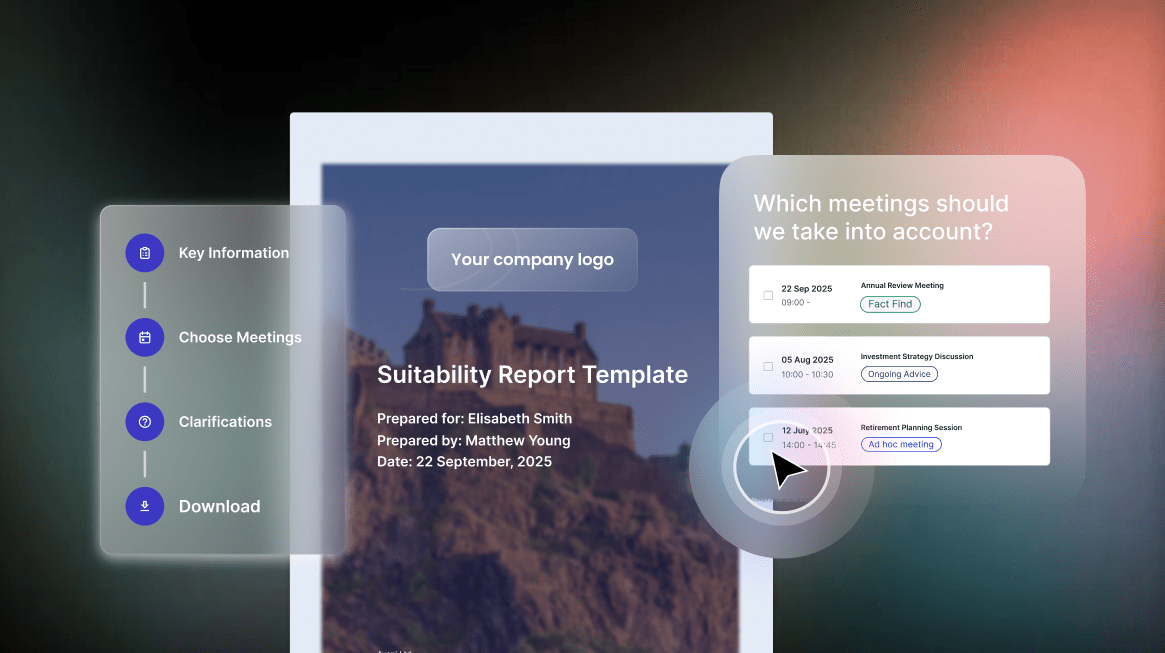
Documentation generation produces required records automatically. AI creates suitability reports, customer communications and compliance documentation without manual writing.
Compliance monitoring automates quality assurance checking. AI samples interactions, evaluates outcomes and flags issues requiring human review.
Administrative tasks including CRM updates, file management and workflow coordination happen automatically. AI eliminates manual data entry and process management.
One advice network calculated that AI automation reduced cost per client from £85 to £18 for straightforward advice. This 79% cost reduction enabled mass market service.
Business Model Economics
Viable mass market models require specific revenue and cost structures.
Service fees of £100 to £300 for initial advice align with customer willingness to pay whilst covering costs. Product-embedded fees work better than standalone charges for mass market consumers.
Ongoing revenue from platform fees, product charges or subscription models provides recurring income. Annual fees of 0.5% to 0.75% generate adequate revenue at scale.
Volume requirements mean firms need substantial customer numbers for profitability. Break-even typically occurs at 2,000 to 4,000 mass market clients.
Contribution margin per customer of £50 to £100 allows reasonable returns when firms reach scale. Small individual margins multiply across thousands of customers.
Customer lifetime value matters more than single transaction revenue. Serving customers from their 20s through retirement creates substantial cumulative value.
Foresters Financial serves 1.3 million customers profitably demonstrating mass market viability when business models are designed appropriately.
Customer Segmentation Strategy
Not all mass market consumers require the same service intensity or generate equal value.
Investable assets ranging from £5,000 to £10,000 represent entry-level customers. Simplified advice on single products suits these consumers.
Middle mass market with £10,000 to £30,000 assets may need guidance on pensions, ISAs and basic protection. Moderate service intensity remains affordable.
Upper mass market holding £30,000 to £50,000 approaches minimum thresholds for traditional advice. These customers may graduate to comprehensive service over time.
Life stage segmentation identifies needs based on age and circumstances. Young professionals need different guidance than pre-retirees.
Service propensity scoring predicts which customers will engage regularly versus seeking occasional guidance. Resource allocation adjusts accordingly.
Technology Stack Requirements
Serving mass market clients profitably requires integrated technology capabilities.
Digital fact-finding tools enable customers to provide information conveniently through web or mobile interfaces. Conditional logic shows only relevant questions reducing burden.
AI-powered advice engines process customer data, apply suitability criteria and generate appropriate recommendations. Purpose-built financial services AI delivers better results than generic tools.
Customer portals provide self-service access to accounts, recommendations and educational resources. Digital channels reduce service costs.
Automated communication systems send reminders, updates and educational content. Triggered messages maintain engagement without manual effort.
CRM integration ensures customer information flows between systems. Single source of truth prevents data inconsistencies.
Analytics platforms monitor customer behaviour, engagement levels and lifetime value. Data guides strategy and identifies opportunities.
One wealth manager built their mass market technology stack in 20 weeks using vendor platforms for advice engine and customer portal with custom integration to existing CRM.
Service Delivery Models
Different approaches suit various firm strategies and customer preferences.
Digital-first delivery provides primarily automated service with human support available when needed. This model minimises costs whilst maintaining quality.
Hybrid models combine digital tools with periodic human interaction. Customers receive AI-powered recommendations with adviser calls at key milestones.
Community-based approaches group customers with similar needs for educational webinars, group calls or online forums. Shared service reduces per-customer costs.
Subscription models charge monthly fees for ongoing access to digital tools, AI recommendations and human support. Predictable revenue aids planning.
Transaction-based pricing charges for specific services when customers need them. This suits consumers seeking occasional guidance.
Tiered service offers different levels ranging from pure digital through hybrid to full human service. Customers choose appropriate tiers for their preferences and complexity.
Customer Acquisition Economics
Reaching mass market consumers requires efficient marketing spending acceptable payback periods.
Customer acquisition costs must be low enough for business model viability. Spending £200 to £500 per customer works when lifetime value is £1,000 to £3,000.
Digital marketing through social media, search advertising and content provides cost-effective reach. Online channels access mass market audiences efficiently.
Partnership distribution leverages existing relationships employers, platforms or product providers have with target customers. Shared acquisition costs improve economics.
Referral programmes incentivise existing customers to recommend services. Satisfied customers become acquisition channels.
Educational content attracts consumers researching financial decisions. Blogs, calculators and tools generate qualified leads.
Conversion optimisation improves proportion of prospects becoming customers. Better digital experiences and simplified onboarding increase conversion rates.
Regulatory Compliance at Scale
Maintaining FCA standards whilst serving thousands of customers requires efficient compliance approaches.
Automated quality assurance samples customer interactions using AI. Technology reviews more cases than manual processes allow whilst identifying issues requiring human attention.
Risk-based oversight focuses human review on higher-risk situations. Straightforward cases receive automated monitoring whilst complex circumstances get enhanced review.
Continuous monitoring tracks outcomes across customer populations. Aggregate data identifies trends suggesting process improvements or training needs.
Consumer Duty evidence automation generates required data demonstrating good outcomes, fair value and customer understanding at scale.
Complaint handling systems track issues, identify patterns and ensure fair resolution. Technology enables consistent complaint management across large customer bases.
Regulatory reporting automation compiles required submissions from operational data. Systems maintain records and generate reports reducing manual effort.
Profitability Analysis
Understanding mass market economics guides strategic decisions about market entry and expansion.
Revenue per customer varies by service model and assets. Typical annual revenue ranges from £150 to £400 per customer combining initial and ongoing fees.
Cost per customer with AI automation ranges from £50 to £100 annually including technology, staff and overhead allocation.
Contribution margin of £50 to £300 per customer provides funds for customer acquisition and profit after recovering costs.
Break-even analysis determines customer volumes needed for profitability. Firms typically need 2,000 to 4,000 customers covering fixed technology costs.
Profitability improves substantially beyond break-even as fixed costs spread across more customers. At 10,000 customers, margins strengthen significantly.
Return on investment calculations show payback in 18 to 36 months for firms reaching target customer volumes.
One mid-sized firm projected break-even at 3,000 mass market customers in year two with profitability improving to 25% margins at 8,000 customers by year four.
Customer Retention Strategies
Keeping mass market customers engaged determines lifetime value and business sustainability.
Regular communication maintains relationships without excessive cost. Automated emails, app notifications and educational content keep firms top of mind.
Proactive guidance at life events strengthens loyalty. AI identifies milestones like promotions, home purchases or approaching retirement triggering relevant outreach.
Performance reporting shows customers how their finances progress. Transparent updates on goals, returns and actions taken build trust.
Educational resources help customers understand financial concepts. Video explainers, articles and calculators provide value beyond transactions.
Easy access to human support when needed prevents frustration. Available advisers for complex questions or reassurance maintains confidence.
Service quality consistency keeps customers satisfied. Reliable, accurate guidance delivered efficiently builds positive reputation.
Retention rates of 85% to 90% annually are achievable with strong service. High retention maximises customer lifetime value supporting business model viability.
Competitive Positioning
Firms serving mass market clients face specific competitive dynamics requiring strategic positioning.
Value proposition emphasises accessibility, affordability and appropriate guidance for consumers traditional advice firms do not serve. Messaging focuses on inclusion.
Differentiation from robo-advisers highlights human oversight, UK expertise and comprehensive service beyond pure investment management.
Comparison with traditional advice explains how technology enables lower costs whilst maintaining quality. Transparency about service models builds trust.
Target audience definition clarifies which consumers benefit most from mass market service. Precise targeting improves acquisition efficiency.
Brand perception management ensures mass market service enhances rather than diminishes firm reputation. Quality emphasis prevents commoditisation concerns.
Growth Path Strategy
Successful mass market service often follows staged expansion managing risk whilst building capability.
Pilot phase serves 200 to 500 customers proving business model viability and refining processes. Limited exposure allows learning without major commitment.
Initial scale grows to 2,000 to 3,000 customers achieving break-even and building operational confidence.
Expansion accelerates to 5,000 to 10,000 customers improving profitability and establishing market position.
Optimisation phase refines processes, improves retention and increases revenue per customer. Mature operations generate strong returns.
Adjacent segments expand service to related customer groups or additional products. Successful models extend naturally.
Frequently Asked Questions
Can traditional advice firms add mass market service successfully? Yes, though cultural adjustment is required. Firms must embrace different economics, technology-enabled processes and volume-focused strategies. Separate brands or divisions often work best.
What customer assets minimum makes mass market service viable? Firms successfully serve customers with £5,000 investable assets when using appropriate technology and business models. Economics improve substantially above £10,000.
How long until mass market service becomes profitable? Break-even typically occurs within 18 to 24 months assuming firms reach 2,000 to 3,000 customers. Profitability improves significantly beyond break-even.
Does mass market service cannibalise traditional advice revenue? Minimal cannibalisation occurs as mass market targets consumers traditional advice does not serve. Customers may graduate from mass market to full advice as assets grow.
Discover how Aveni enables profitable mass market service through AI automation →